
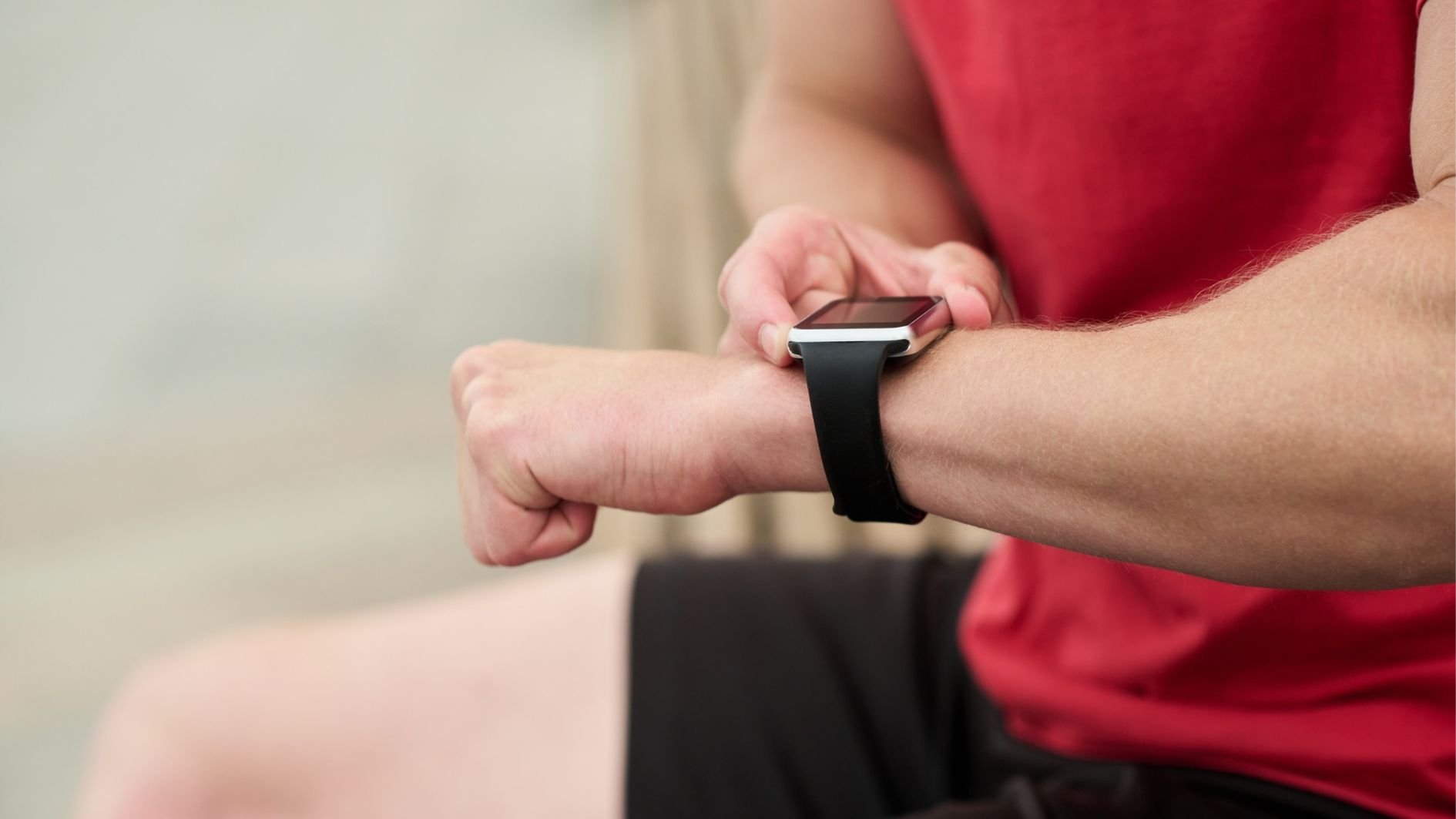
A run used to leave behind a fairly simple set of information: how far you went, how long it took and, perhaps most importantly, how you felt.
Today, a watch can tell you your average pace, heart rate, cadence, elevation, estimated calories, VO₂ max, training load and recovery time. By the following morning, it may also have assessed your sleep, heart rate variability and readiness for another session.
For many recreational athletes, checking the numbers has become almost as routine as the activity itself.
That is unlikely to change soon. Wearable technology has been named the number one worldwide fitness trend for 2027 by the American College of Sports Medicine (ACSM), marking its tenth time at the top of the annual ranking. Since wearables were first included in the survey in 2016, they have never fallen outside the top three.
Smartwatches, GPS devices, heart-rate monitors and fitness trackers are now part of everyday sport. The more interesting question is no longer whether we should use them.
It is how much attention we should give them.
Why we like measuring ourselves
There are good reasons why wearables have become so popular.
They turn something that can feel abstract into information we can see.
A runner knows whether their pace has improved over six months. A cyclist can compare the effort required on the same climb. Someone beginning to exercise may notice that 5,000 daily steps gradually became 8,000. A recreational athlete can look back over a month and realise that consistency was better than it felt at the time.
The ACSM highlights self-monitoring, accountability and sustained engagement among the main potential benefits of wearable technology.
Research supports at least part of that argument. A systematic review and meta-analysis examining wearable activity trackers found that they could increase daily step counts and moderate-to-vigorous physical activity, although their impact varied considerably according to the individual and the way the technology was used.
More recent research also suggests that wearables can influence how people experience sport. A 2026 study involving new sports participants found that wearable users reported higher levels of motivation, perseverance and psychological engagement than non-users.
So the problem is not measuring.
The problem begins when every number is treated as equally meaningful.
Your watch measures some things. It estimates many others
A smartwatch may present dozens of metrics on the same screen, giving the impression that they all have similar levels of precision.
They do not.
Some measurements are relatively close to the signals actually captured by the device. Others are estimates created by combining sensor information with algorithms, personal data and assumptions about how the body works.
A major 2026 review of consumer smartwatch technology makes this distinction particularly clear. Metrics such as energy expenditure, aerobic capacity, sleep stages, body composition and readiness scores can involve substantial algorithmic processing rather than direct physiological measurement.
This matters because accuracy varies considerably depending on the device, activity, person and metric being measured.
Heart rate is one of the stronger examples.
A recent systematic review examining the evolution of wrist-worn activity trackers found that heart-rate accuracy has improved substantially as optical sensors and motion filtering have developed. Step counting during steady walking has also become considerably more reliable.
Calories are another story.
The same review found that energy-expenditure estimates from modern devices can still show errors of roughly 10% to 40% compared with indirect calorimetry, the laboratory method commonly used to estimate energy expenditure.
In other words, a watch displaying 650 calories after training does not necessarily mean the body used precisely 650 calories.
It is an estimate presented with a very precise-looking number.
Team sports make measurement even more complicated
Running at a steady pace and playing basketball, football or rugby are very different physical challenges.
Team sports involve rapid changes of direction, accelerations, stops, jumps, contact and short periods of high-intensity effort separated by lower-intensity movement.
That makes certain measurements harder.
A 2026 systematic review examining wearable devices specifically in team sports found that heart-rate monitoring generally performed well, particularly in controlled conditions. Energy-expenditure estimates, however, showed considerably more variation and often underestimated the demands of high-intensity, intermittent activity.
For an amateur footballer, that distinction matters.
Knowing that the average heart rate during a session has changed over time may provide useful information. Treating an estimated calorie figure as an exact account of how physically demanding the match was is much harder to justify.
The device is not necessarily wrong.
It may simply be answering a question that technology still cannot measure perfectly from a wrist.
Sleep scores may be useful, but they do not know exactly how you slept
Sleep tracking is another area where the numbers can feel more definitive than the underlying measurement.
Most consumer wearables do not directly observe whether someone is asleep in the same way as a clinical sleep study. Instead, they infer sleep from combinations of movement, heart rate and other physiological signals.
A systematic review and meta-analysis published in 2026 compared consumer sleep trackers with polysomnography, the clinical reference standard for sleep assessment.
Wearables tended to overestimate total sleep time and sleep efficiency and underestimate periods of wakefulness after sleep began. Performance varied between devices, and no single device was consistently the most accurate.
The researchers concluded that wearables can provide reasonable estimates of broader sleep patterns and may be useful for monitoring trends, but should not be treated as stand-alone diagnostic tools or as precise measurements of individual sleep stages.
For an amateur athlete, that suggests a useful way of looking at the information.
If sleep duration appears consistently lower for several weeks, the trend may be worth noticing.
If a watch gives someone a sleep score of 61 after a night when they wake feeling rested, however, the number does not automatically overrule the person experiencing it.
A readiness score is not a verdict
Modern devices increasingly go one step further.
Instead of simply displaying data, they interpret it.
Recovery scores, body batteries, training readiness and similar metrics often combine several inputs, such as resting heart rate, heart rate variability, recent activity and estimated sleep.
That can be helpful. A recreational athlete looking at several weeks of information may notice that harder sessions repeatedly coincide with poor sleep or insufficient recovery.
But a readiness score is still an algorithmic output.
The formula differs between manufacturers, and much of the processing behind commercial devices is proprietary. A score of 42 on one platform cannot simply be compared with 42 on another.
The recent review of smartwatch technology therefore suggests that these devices may be particularly useful for tracking changes within the same person over time, rather than treating their outputs as precise physiological measurements or comparing numbers across different devices.
That distinction is easy to overlook.
The number appears objective. The interpretation behind it may be considerably more complicated.
When useful feedback starts becoming pressure
There is another side to measuring sport that has less to do with sensor accuracy.
What happens when missing a target starts to feel like failure?
A recreational runner may originally buy a watch to record distance. Months later, there can be daily step targets, weekly mileage, sleep scores, training loads and recovery indicators to satisfy.
Research into the psychological effects of this behaviour is still developing, but some recent findings are worth considering.
A 2026 study involving 120 non-professional athletes found associations between fitness tracker use and higher personal standards, greater concern about mistakes and some disruption to concentration. The researchers were careful not to claim that trackers cause these effects, but concluded that the psychological impact can depend heavily on why and how someone uses the device.
Another 2026 study found generally positive associations between wearable use and motivation among people new to sport. However, it also warned that sharing data can introduce social comparison and psychological pressure.
That captures the contradiction rather well.
The same number can motivate one person and frustrate another.
One runner sees a slower pace and understands that it was an easy recovery session. Another sees it as evidence of a bad run.
The technology is the same.
The relationship with it is not.
Professional athletes have data teams. Most of us have an app
There is also an important difference between data in elite sport and data in recreational sport.
Professional athletes increasingly train within systems where information is interpreted alongside coaching observations, medical assessments, performance testing and knowledge of the athlete's history.
A number rarely exists alone.
For the recreational athlete, an app may provide the number and the interpretation at the same time.
That makes simplicity important.
Someone training for their first 10K probably does not need to make decisions based on every metric their watch can produce. Distance, pace, training consistency and perhaps heart rate may already answer most of the questions relevant to that goal.
More information is not automatically better information.
Sometimes it is simply more information.
The most useful wearable may be the one you occasionally ignore
None of this makes smartwatches or fitness trackers unnecessary.
Used well, they can make progress visible, help people understand training patterns and provide motivation to remain active. Modern devices are also far more sophisticated and, for several measurements, considerably more accurate than earlier generations.
The key is understanding their role.
A wearable is particularly good at remembering things people cannot. It can store months of training, reveal trends and make comparisons that would otherwise depend on memory.
What it cannot fully measure is how heavy someone's legs feel during a warm-up, whether work has been unusually stressful, why an athlete is enjoying training less than usual or whether spending an afternoon playing sport with friends mattered more than the pace recorded afterwards.
Those pieces of information still count.
Perhaps the most sensible relationship with sports data is therefore not to measure less, but to measure with more perspective.
Choose metrics that relate to the goal. Look for patterns rather than reacting to isolated scores. Understand which numbers are direct measurements and which are estimates. Use technology to inform decisions rather than make every decision automatically.
And occasionally, there is nothing wrong with finishing a session and deciding that the most useful piece of information is simply that it felt good.
The watch can record the rest.
Sources:
https://acsm.org/2027-fitness-trends/
https://pubmed.ncbi.nlm.nih.gov/42515370/
https://pubmed.ncbi.nlm.nih.gov/42698643/
https://pubmed.ncbi.nlm.nih.gov/42506806/
https://pubmed.ncbi.nlm.nih.gov/42175611/
https://pubmed.ncbi.nlm.nih.gov/34020170/