
How Europe’s Football Season Is Taking Shape in 2026
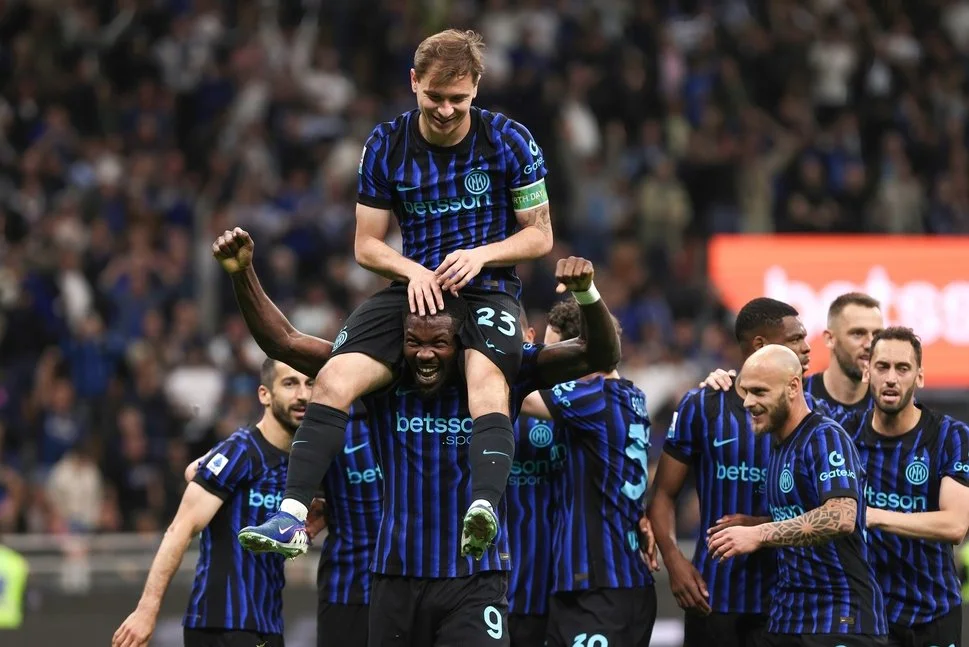
As the 2025/26 football season approaches its conclusion, Europe’s football landscape is once again being shaped by title races, continental battles and the familiar mixture of celebration, tension and anticipation that defines this stage of the year.
Some domestic champions have already been crowned. Elsewhere, title races remain open until the final weeks. Across Europe, UEFA competitions continue to dominate headlines, while attention is also beginning to shift toward the FIFA World Cup 2026, now only weeks away.
Spain: Barcelona Crowned Champions Again
In Spain, FC Barcelona have officially secured the 2025/26 La Liga title after defeating Real Madrid 2-0 in El Clásico. The victory confirmed another domestic triumph under Hansi Flick and reinforced Barcelona’s return to consistency at national level.
The title also highlighted Barcelona’s ability to rebuild around a younger generation while maintaining the club’s traditional identity centred around technical football and positional play.
Beyond Barcelona and Real Madrid, La Liga continues to demonstrate its competitive depth through clubs such as Atlético Madrid and Villarreal, both of whom remain highly respected across Europe for their consistency and strong sporting structures.
England: The Premier League Title Race Goes to the Wire
The Premier League remains the major unresolved story in European football.
Arsenal currently hold the advantage over Manchester City, but the title race is still alive heading into the final stretch of the season. Every fixture feels decisive, and the tension surrounding the race has reinforced once again why the Premier League remains one of the world’s most-watched football competitions.
Tottenham Hotspur F.C. and West Ham United F.C., both clubs with a long history in the Premier League, are currently involved in an intense battle to avoid relegation.
Part of the league’s appeal lies precisely in this uncertainty. The combination of tactical intensity, atmosphere, global visibility and competitive balance ensures that interest remains high until the very end.
Germany: Bayern Munich Return to the Top
In Germany, Bayern Munich have once again reclaimed the Bundesliga title, returning to familiar territory after stronger challenges in recent seasons.
While Bayer Leverkusen and Borussia Dortmund continue to raise standards domestically, Bayern’s ability to sustain elite performance over the course of an entire campaign remains one of the defining characteristics of German football.
In third place is RB Leipzig.
France: PSG Continue Their Era of Dominance
Paris Saint-Germain F.C. remain the dominant force in French football and is once again Ligue 1 champion, continuing a period of domestic supremacy that has shaped French football throughout the last decade. This will mark PSG’s fifth consecutive league title.
At the same time, clubs such as Lens, Marseille and Lille continue to strengthen the league’s competitiveness below the title race, helping Ligue 1 develop greater depth and visibility internationally.
Italy: Inter Milan Confirm Serie A Title
In Italy, Inter Milan has officially secured the 2025/26 Serie A title, reaffirming the club’s return to sustained domestic dominance in recent seasons.
Their campaign once again highlighted the tactical intensity and competitive depth that continue to define Italian football. While clubs such as Juventus, AC Milan and Napoli remained highly competitive throughout the season, Inter demonstrated greater consistency across the campaign, combining defensive organisation with attacking efficiency.
More broadly, Serie A continues to strengthen its international reputation. Italian clubs have become increasingly competitive in UEFA competitions in recent years, helping to pave the way to restore the league’s image as one of Europe’s strongest and most tactically sophisticated football environments.
Beyond the “Big Five”: Portugal, The Netherlands and Other Competitive Leagues
Outside Europe’s traditional “Big Five” leagues, several championships continue to produce highly competitive football environments and strong club identities.
In Portugal, FC Porto has secured the Liga Portugal title, reaffirming the intensity and competitiveness that continue to define Portuguese football. Despite operating with smaller financial resources than Europe’s major leagues, Portuguese clubs consistently remain highly organised, tactically demanding and capable of competing on the European stage.
This season also highlighted the growing depth of Portuguese football beyond the traditional title race, with S.C. Braga reaching the semi-finals of the UEFA Europa League and further strengthening Portugal’s reputation for producing highly competitive clubs in European competitions.
In the Netherlands, PSV Eindhoven have also been crowned Eredivisie champions after another strong season built around attacking football and one of Europe’s most respected player development systems.
Meanwhile, other leagues across Europe continue to provide dramatic title races and highly engaged football cultures. In Scotland, for example, the Premiership title battle between Heart of Midlothian F.C. and Celtic F.C. has become one of the continent’s most unexpected and compelling stories this season.
Leagues in countries such as Belgium and Turkey also continue to contribute passionate atmospheres, historic rivalries and clubs with strong European ambitions, reinforcing the diversity and richness of the wider European football ecosystem.
UEFA Competitions Continue to Define the Season
Domestic football remains central, but modern seasons are increasingly shaped by UEFA competitions.
This year’s UEFA Champions League has once again delivered major storylines, with Arsenal F.C. and Paris Saint-Germain F.C. reaching the final in Budapest.
The Europa League and Conference League have also continued to grow in relevance, providing clubs from a wider range of countries with meaningful European experiences and opportunities to build international visibility beyond the continent’s traditional elite.
This season’s UEFA Europa League final will be contested between SC Freiburg, who eliminated S.C. Braga in the semi-finals, and Aston Villa F.C.. Meanwhile, the UEFA Conference League final will see Crystal Palace F.C. face Rayo Vallecano.
Interestingly, English football will therefore have representation in all three major UEFA club finals this season: Arsenal in the Champions League, Aston Villa in the Europa League and Crystal Palace in the Conference League, underlining once again the depth and competitiveness of Premier League clubs across European competitions.
Increasingly, these tournaments are helping create a more connected European football landscape, where clubs outside the biggest financial markets can still produce memorable continental moments.
Attention Already Turns Toward the FIFA World Cup 2026
While the club season approaches its conclusion, attention is also beginning to shift toward the FIFA World Cup 2026, which will take place in the United States, Canada and Mexico.
The tournament will be historic for several reasons. It will be the first World Cup hosted by three countries and the first to feature an expanded 48-team format.
As qualification campaigns conclude and squads begin to take shape, discussions around player workload, scheduling and preparation are already becoming part of the football conversation. For many players competing deep into domestic and European competitions, the transition into a World Cup summer will once again test the limits of the modern football calendar.
Football Never Really Stops
One of the defining characteristics of modern football is its continuity.
As domestic championships conclude, attention immediately shifts toward European finals, international tournaments, transfer speculation and pre-season planning. The conversation rarely pauses.
That constant cycle is part of what makes football such a powerful cultural force across Europe and beyond. Every season creates new narratives while remaining connected to histories, rivalries and traditions that supporters carry from generation to generation.
And while Europe’s major trophies are beginning to find their owners, there is still one important title left to decide this summer: the champions of the Portugal Summer Football Cup, taking place on 4 and 5 July.