
Why Running Is Becoming More About Community Than Competition
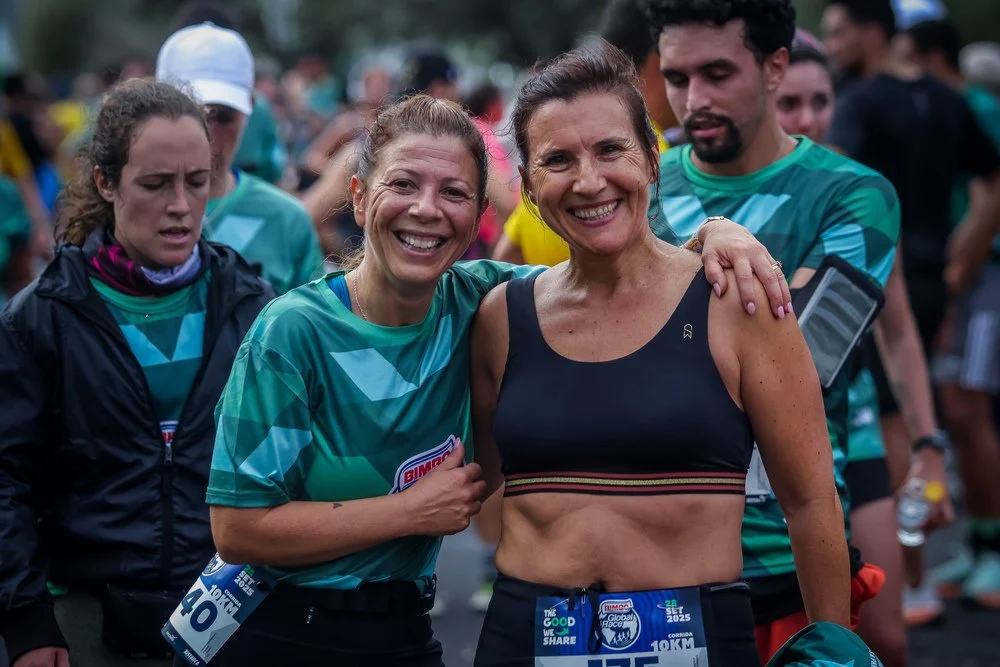
Not long ago, running was mostly seen as an individual pursuit.
You ran to improve your time, to beat your personal best, to prepare for a race. Progress was measured in minutes and seconds, and motivation often came from performance goals.
That is still true. But it is no longer the full picture.
Across cities around the world, a different kind of running culture is quietly taking shape. One where pace matters less than presence, where consistency outweighs competition, and where people show up not only to run, but to belong.
Running is becoming, increasingly, a social experience.
The Rise of Social Running Culture
In recent years, running has experienced a global surge in participation. Events such as marathons and half-marathons continue to sell out, while local running groups are growing at a pace few expected.
But what stands out is not just the number of runners. It is the way people are choosing to run.
Running clubs are no longer limited to performance-focused athletes. Many are informal, inclusive and built around community rather than competition. They meet after work, early in the morning or at weekends. Some run short distances, others longer ones, but the common thread is not speed. It is connection.
For many participants, the run itself is only part of the experience. The conversations before and after, the shared routine, and the feeling of being part of something consistent are often just as important.
From Personal Bests to Shared Experiences
This shift reflects a broader change in how people relate to sport.
For a long time, running was framed around individual achievement. Training plans, race targets and performance tracking shaped the experience. Success was something personal and measurable.
Now, a growing number of runners are redefining success.
Finishing together matters. Showing up regularly matters. Enjoying the process matters.
In many groups, stronger runners adapt their pace to stay with others. New runners are encouraged, not compared. The emphasis shifts from “How fast did you run?” to “Did you enjoy it?”
This does not mean competition has disappeared. It simply means it is no longer the only reason people run.
Why Community Matters More Than Ever
There are several reasons behind this change, and they go beyond sport itself.
Modern life has become increasingly individualised. Work, routines and even entertainment are often experienced alone. In that context, running clubs offer something simple but powerful: shared time and shared effort.
They create a sense of structure. A reason to show up. A familiar group of people who expect you to be there.
This consistency builds connection in a way that is difficult to replicate elsewhere. It also lowers the barrier to entry. Running alone can feel intimidating at the start. Running with others makes it easier.
For many, joining a running group is not just about fitness. It is about belonging.
This sense of community is also visible in another growing dimension of running: participation in events linked to social causes. Charity runs and global initiatives increasingly bring together not only runners, but also families, friends and entire communities around a shared purpose. Events such as the Bimbo Global Race are a clear example, where participants run not only for personal or collective experience, but also to contribute to a wider social impact. In these contexts, running becomes more than a physical activity. It becomes a way of connecting people through a common cause, reinforcing the idea that the value of the experience often goes far beyond the act of running itself.
The Influence of Urban Culture and Lifestyle
Cities have played a major role in this transformation.
Urban running clubs have become part of the social fabric in places like London, Lisbon, New York or Copenhagen. They are often linked to cafés, local brands or creative communities. Runs end with coffee, conversations or shared meals.
This integration with lifestyle makes running feel less like a task and more like a habit that fits naturally into everyday life.
Social media has amplified this effect. Platforms like Instagram and Strava have turned running into a visible, shared activity. Routes, photos and group runs are documented and shared, reinforcing the idea that running is something you do with others, not just for yourself.
Technology Is Supporting the Shift, Not Driving It
Wearables and apps have made running more accessible and measurable than ever.
Runners can track distance, pace, heart rate and recovery. They can compare efforts, follow structured plans and analyse performance in detail.
Interestingly, however, while technology has increased individual data, it has also strengthened community.
Apps like Strava allow runners to share their sessions, join clubs and interact with others. Progress becomes something that is not only measured, but also shared.
In this way, technology supports the social side of running rather than replacing it.
A More Sustainable Relationship with Sport
One of the most significant consequences of this shift is sustainability.
When running is driven only by performance, motivation can fluctuate. Injuries, setbacks or missed targets can lead to frustration or even dropout.
When running is connected to community, motivation tends to be more stable.
People show up for the group, not just for the result. They run even on days when performance is not optimal. The experience becomes less fragile because it is not dependent on a single outcome.
This often leads to longer-term engagement with sport, which is ultimately more valuable than short bursts of high performance.
What This Means for the Future of Sport
Running is not the only sport where this change is happening, but it is one of the clearest examples.
It shows that sport does not need to lose its competitive edge to evolve. It can expand its meaning.
Participation can coexist with performance. Community can coexist with ambition.
For organisations, clubs and event organisers, this shift is important. It suggests that creating environments where people feel welcome, connected and engaged may be just as important as designing competitive structures.
More Than a Run
At its core, running has not changed.
It is still one of the simplest forms of movement. It still requires no complex equipment. It still offers physical and mental benefits that are well-documented.
What has changed is the context around it.
Running is no longer only about how far or how fast you go. It is also about who you go with, how you feel and whether you come back.
And increasingly, that is what keeps people running.