
Basketball by the Numbers: Records That Have Shaped the Global Game
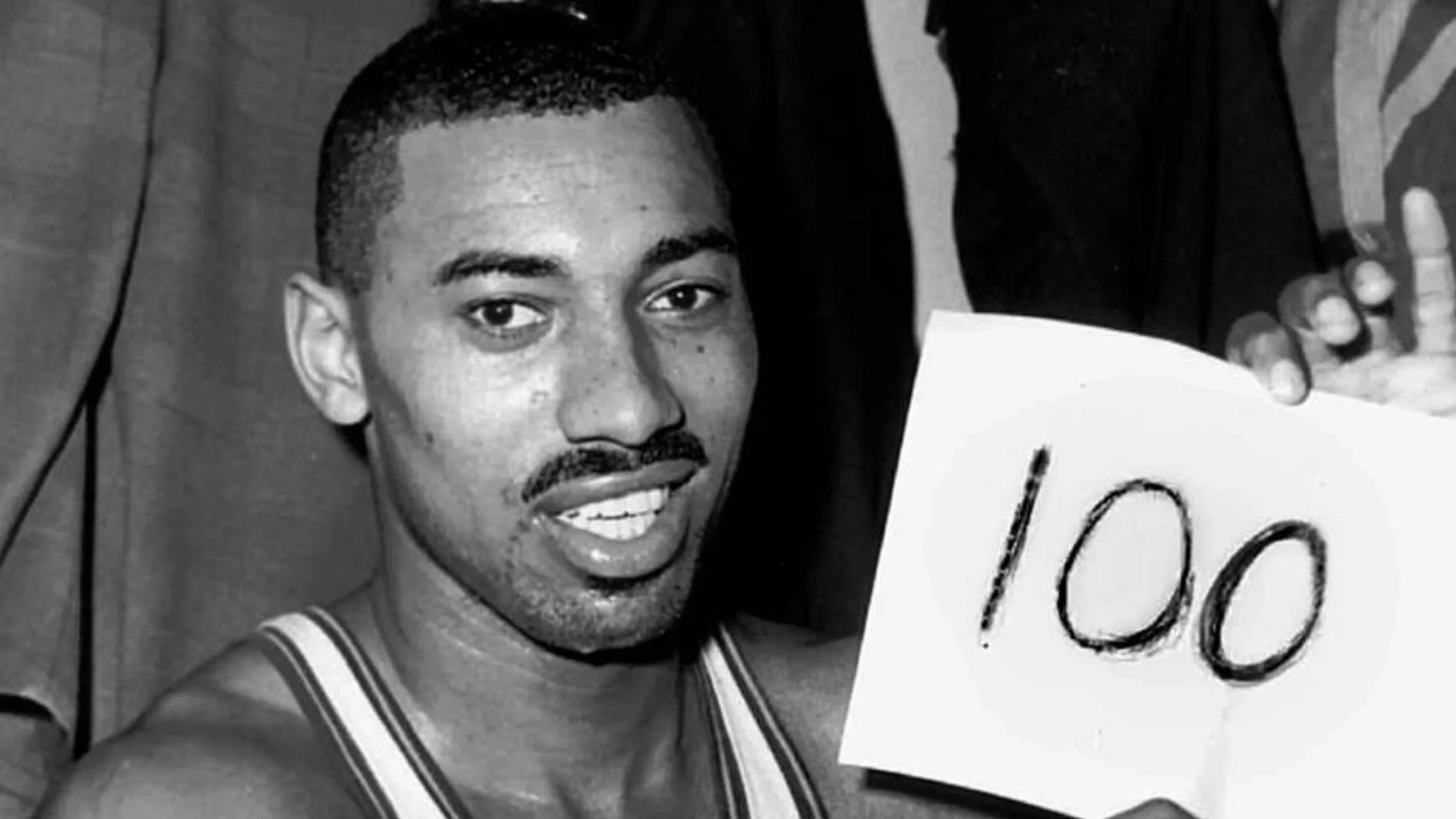
Photo: Wilt Chamberlain 100 point game 1962, Wikimedia Commons via public domain search engine Picryl.com, cropped.
Over the past two weeks, we have looked at rugby and football through the records, rankings and statistics that help tell the history of each sport.
This week, basketball takes its turn.
It is a particularly interesting sport to explore through numbers because there is no single competition that defines its entire history. The FIBA Basketball World Cup and Olympic Games tell the story of international basketball. The NBA has produced records recognised far beyond North America, while the WNBA and EuroLeague have developed their own milestones, dynasties and statistical benchmarks.
Some numbers are built over entire careers. Others came from one extraordinary game.
Who has won the most Basketball World Cups? Which player has scored more Olympic points than anyone else? What is the highest individual score ever recorded in an NBA game? And how did one point guard manage to finish his career as the league's all-time leader in both assists and steals?
Here are some of the records that have helped shape basketball history.
USA and Yugoslavia share the Men's Basketball World Cup record
Unlike football or rugby, there is no single outright leader at the top of the men's basketball World Cup rankings.
The United States and the former Yugoslavia have each won the FIBA Basketball World Cup five times, the highest total in the history of the competition.
The USA claimed their titles in 1954, 1986, 1994, 2010 and 2014, while Yugoslavia's five victories came in 1970, 1978, 1990, 1998 and 2002.
The Soviet Union won three titles, while Brazil and Spain have two each. Germany joined the list of world champions for the first time in 2023, defeating Serbia in the final in Manila.
The shared record is interesting partly because the two basketball histories developed under very different circumstances. The USA have long been the dominant nation at Olympic level, but the World Cup has historically been much less predictable, particularly during decades when NBA players did not participate regularly in international competition.
The next Men's Basketball World Cup takes place in Qatar in 2027, meaning the five-title record remains intact for at least another year.
Source: FIBA – USA and Yugoslavia lead the World Cup title rankings
The USA women have taken domination considerably further
If the men's World Cup record is shared, the women's equivalent is anything but close.
In September 2026, the United States won their 12th FIBA Women's Basketball World Cup title, beating France 97-79 in the final in Berlin.
It was also their fifth consecutive world title.
The USA arrived in Germany as the dominant force in the competition and left having extended their World Cup winning streak to 36 matches. Their most recent run of titles now covers 2010, 2014, 2018, 2022 and 2026.
Breanna Stewart added an individual record of her own in Berlin, becoming the first player to be named Women's Basketball World Cup MVP twice, having previously received the award in 2018.
Numbers such as these demonstrate the scale of the American women's programme. Winning a major international tournament once requires an exceptional team. Remaining unbeaten through multiple generations of players and five consecutive World Cups requires an entire system capable of replacing champions with more champions.
Source: FIBA – USA win their 12th Women's Basketball World Cup
Olympic basketball has been even more American
The United States' Olympic record is one of the most dominant in any major team sport.
The USA men's team have won 17 Olympic gold medals, including five consecutive titles from Beijing 2008 through Paris 2024.
Basketball became an official men's Olympic sport in 1936, and the USA won the first seven tournaments before the Soviet Union ended that run in Munich in 1972.
The women's record is equally remarkable.
After defeating France 67-66 in the Paris 2024 final, the USA secured their eighth consecutive women's Olympic basketball title and tenth overall. Their winning sequence stretches back to Atlanta 1996.
That means an entire generation of international players has grown up without seeing anyone other than the United States win the women's Olympic basketball tournament.
Los Angeles 2028 will give both American teams the opportunity to extend their respective sequences on home soil.
Source: Olympics – Complete list of Olympic basketball champions and medallists
Oscar Schmidt: 1,093 Olympic points and 55 in one game
The NBA has produced many of basketball's most famous scorers, but one of the sport's most extraordinary scoring records belongs to a player who never played a single NBA game.
Brazilian legend Oscar Schmidt scored 1,093 points at the Olympic Games, more than any other basketball player in history.
He accumulated the total across five Olympic appearances between Moscow 1980 and Atlanta 1996.
His 1988 tournament in Seoul was especially remarkable. Schmidt averaged 42.3 points per game and scored 55 against Spain, which remains the individual scoring record for an Olympic basketball game.
To put his Olympic career into perspective, Australia's Andrew Gaze sits second on the historical scoring list with 789 points, while Spain's Pau Gasol accumulated 649.
Schmidt was selected by the New Jersey Nets in the 1984 NBA Draft but chose not to move to the league, in large part because doing so under the rules of the time would have prevented him from representing Brazil in international amateur competitions.
His career consequently developed very differently from those of most globally recognised basketball stars, with long spells in Brazil and Europe alongside an extraordinary commitment to the national team.
Source: FIBA Hall of Fame – Oscar Schmidt's career and records
Hortência: 46 points in a Women's World Cup game
Brazil also owns one of the great records in women's international basketball.
Hortência Marcari scored 46 points against Yugoslavia at the 1983 Women's Basketball World Cup, the highest individual score ever recorded in a game at the competition.
The Brazilian's impact was not limited to one exceptional performance.
Across 31 Women's World Cup games, Hortência averaged 25.1 points, another all-time competition high according to FIBA.
Her greatest team achievement arrived eleven years after the 46-point performance. In 1994, she helped Brazil win the Women's World Championship in Australia, defeating the USA 110-107 in the semi-final before beating China in the final.
Hortência averaged 27.6 points per game during that tournament.
Basketball statistics inevitably favour players from eras with greater media exposure, but records such as hers are a reminder of how much of the sport's international history was written outside the NBA and, in this case, outside the United States.
Source: FIBA – Women's World Cup records and statistics
251 points in one World Cup game
Basketball has changed enormously since the early editions of the Men's World Cup, but one scoring record from 1978 still sits at the top of the FIBA record book.
Brazil defeated China 154-97, producing 251 combined points, the highest total in a Men's FIBA Basketball World Cup game.
Several decades later, even the high-scoring modern game has struggled to challenge it.
The 2023 bronze-medal match between the United States and Canada came relatively close by modern standards, with Canada winning 127-118 after overtime. The combined score was 245 points, still six short of the 1978 record.
Brazil's 154 points also illustrate just how unusual the game was. International basketball is played over 40 minutes rather than the NBA's 48, leaving less time in which to accumulate such a score.
Source: FIBA – Basketball World Cup all-time game records
Wilt Chamberlain and the 100-point game
Some sporting records become so familiar that the number itself is enough to identify the event.
In basketball, 100 belongs to Wilt Chamberlain.
On 2 March 1962, playing for the Philadelphia Warriors against the New York Knicks, Chamberlain scored 100 points in a single NBA game.
Philadelphia won 169-147.
Chamberlain made 36 of 63 field-goal attempts and, perhaps surprisingly for a player often criticised for his free-throw shooting, converted 28 of 32 from the line.
He had 41 points by half-time and added 59 in the second half, including 31 in the fourth quarter.
There is no complete video recording of the game. Instead, one image became part of basketball history: Chamberlain sitting in the dressing room holding a piece of paper on which the number “100” had been written.
More than six decades later, nobody has matched it.
Kobe Bryant came closest in the modern era when he scored 81 points for the Los Angeles Lakers against Toronto in 2006.
Source: NBA – Wilt Chamberlain's 100-point game
370 points in one NBA game
Wilt Chamberlain's record belongs to one player. Another remarkable scoring record required two entire teams and three periods of overtime.
On 13 December 1983, the Detroit Pistons defeated the Denver Nuggets 186-184.
The combined total of 370 points remains the highest-scoring game in NBA history, while Detroit's 186 are also the most points scored by one team in a single NBA game.
Four players scored at least 40 points.
Kiki Vandeweghe led Denver with 51, Isiah Thomas scored 47 for Detroit, Alex English had 47 for the Nuggets, and John Long added 41 for the Pistons.
Perhaps the strangest detail is one that reflects the era in which the match was played. Despite combining for 370 points, the teams made only two three-pointers between them, one each.
Modern basketball produces dramatically more three-point attempts, yet this 1983 shootout remains unmatched.
Source: NBA – The highest-scoring game in league history
John Stockton owns two NBA records at once
Scoring statistics dominate many conversations about basketball greatness, but John Stockton built his legacy around what happened before the shot, and what happened when the opposition had the ball.
The former Utah Jazz point guard remains the NBA's all-time leader in assists, with 15,806, and steals, with 3,265.
Leading either category would make for an exceptional career.
Holding both records is particularly unusual because they measure different sides of the game.
Stockton spent all 19 of his NBA seasons with Utah and developed one of basketball's most recognisable partnerships alongside Karl Malone. His ability to repeatedly create scoring opportunities helped make the Stockton-Malone pick-and-roll a defining feature of the Jazz throughout the 1990s.
His longevity also played an important role. Stockton appeared in all 82 regular-season games in 17 of his 19 seasons.
The assist record is particularly imposing. The NBA's official historical statistics still show a gap of more than 3,000 assists between Stockton and the players immediately behind him.
Source: NBA – John Stockton's career and all-time records
Boston's 18 titles and the player who won 11 of them
Team and individual records overlap dramatically in the history of the Boston Celtics.
The Celtics have won 18 NBA championships, more than any other franchise. Their 2024 title moved them ahead of the Los Angeles Lakers, who have 17.
But more than half of Boston's championships were won during one extraordinary player's career.
Bill Russell won 11 NBA championships in 13 seasons, still the most by any player in league history.
The sequence included eight consecutive Celtics titles from 1959 to 1966.
Russell was not primarily defined by scoring. His game was built around defence, rebounding and making a team function around him, helping to change perceptions of what a dominant basketball player could look like.
He also became the NBA's first Black head coach and won his final two championships, in 1968 and 1969, as a player-coach.
Eleven championships remains one of those sporting records that becomes more remarkable as professional leagues become increasingly competitive.
Sources: NBA – Teams with the most championships · NBA – Bill Russell's 11 championships
Diana Taurasi: 10,646 WNBA points
The WNBA has its own scoring benchmark, and it belongs to Diana Taurasi.
Taurasi finished her career with 10,646 regular-season points, making her the highest scorer in WNBA history.
She had already become the first player in league history to reach 10,000 points in August 2023.
The figure was accumulated across 565 regular-season games after the Phoenix Mercury selected her with the first overall pick of the 2004 WNBA Draft.
Her career also demonstrates how club and international success can coexist. Alongside three WNBA titles with Phoenix, Taurasi won six Olympic gold medals with the United States, making her one of the most decorated basketball players of her generation.
The WNBA began in 1997, making its record book considerably younger than the NBA's. Even so, Taurasi created a gap that the next generation of scorers will need years of sustained production to close.
Source: WNBA – All-time statistical leaders
Real Madrid's 11 European titles
The NBA is the world's most visible club basketball competition, but European basketball has its own long history of champions.
At the top of that list sits Real Madrid, with a record 11 European Cup and EuroLeague titles.
The club established its early dominance with four titles between 1964 and 1968, before adding further championships in 1974, 1978 and 1980.
Later generations restored Madrid to the top of European basketball, with titles in 1995, 2015, 2018 and 2023.
That span is what makes the record particularly notable.
Players, coaches, competition formats and even the structure of European professional basketball changed enormously between Madrid's first title and its eleventh. The club nevertheless remained capable of returning to the highest level across several different eras.
Source: EuroLeague – Real Madrid club history
The 2026 Women's World Cup broke records away from the scoreboard too
Not all important basketball records are measured in points or trophies.
The 2026 FIBA Women's Basketball World Cup attracted 236,015 spectators in Berlin, setting a new attendance record for the competition.
The previous high had been 145,519 at the 2022 tournament in Sydney.
The average attendance in Berlin reached 6,556 spectators per game, another competition record, despite the 2026 edition featuring fewer matches than its predecessor.
The final between the USA and France attracted more than 12,000 people to Berlin Arena.
These numbers tell a different story from a scoring record. They measure how the sport itself is developing.
Women's basketball has experienced significant growth in audiences, investment and visibility in recent years, and the 2026 World Cup provided another measurable sign of that expansion.
Source: FIBA – Women's Basketball World Cup 2026 records and final standings
Basketball records tell more than one version of the sport
Basketball does not have a single record book.
Its history has developed through international tournaments, Olympic Games, domestic professional leagues and continental competitions. That makes comparisons more complicated, but also more interesting.
Oscar Schmidt never played in the NBA, yet nobody has scored more Olympic basketball points. Wilt Chamberlain produced 100 points in one NBA night, while Hortência's 46 remain unmatched in a Women's World Cup game. John Stockton built records around creating opportunities and recovering possession rather than finishing plays himself. Bill Russell accumulated championships at a rate modern professional sport makes almost unimaginable.
Then there are the teams.
The USA and Yugoslavia share one men's World Cup record, while the American women's team has built a level of World Cup and Olympic dominance that nobody has come close to matching. Boston leads the NBA. Real Madrid leads Europe.
Some of those numbers may eventually change.
Others have already survived several generations of players.
That was also one of the patterns that emerged from our previous looks at rugby and football. Records allow us to connect very different periods of sporting history, but they also remind us that every apparently untouchable number only remains untouchable until someone finds a way past it.
And basketball has never stopped producing players and teams willing to try.