
Rugby by the Numbers: Records That Have Shaped the International Game
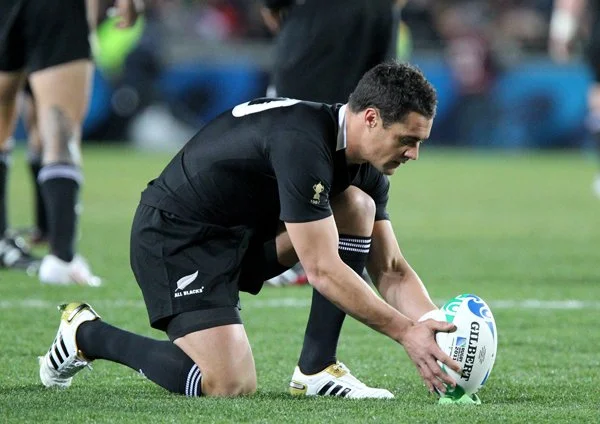
Dan Carter. Photo: Jean Francois Fournier Photographe – Flickr
Rugby history is often remembered through individual moments: a drop goal in a final, a winger breaking through a defensive line, a captain lifting a trophy or an unexpected result that changes a tournament.
Statistics tell a different version of the same story.
They show which teams have dominated over decades, which players kept scoring long after opponents knew exactly what to expect, and which careers combined talent with the durability required to remain at international level for years.
Some rugby records are familiar. Others are surprisingly difficult to guess.
Who has scored the most international tries? Which country has won the most Rugby World Cups? Who has played more World Cup matches than anyone else? And how can the highest score in Men’s Rugby World Cup history not also be the biggest winning margin?
Here are some of the numbers that have helped shape international rugby.
South Africa: four Men’s Rugby World Cups and a record of their own
The most successful team in Men’s Rugby World Cup history is South Africa, with four titles.
The Springboks won their first World Cup on home soil in 1995, defeating New Zealand 15-12 after extra time in one of the most significant matches in the history of the sport.
They followed that success with titles in 2007, 2019 and 2023.
The 2023 victory in France moved South Africa ahead of New Zealand, who have won the Webb Ellis Cup three times, in 1987, 2011 and 2015.
What makes the South African record particularly notable is that the Springboks did not participate in the first two editions of the tournament, in 1987 and 1991. Their four titles have therefore come from eight World Cup appearances.
As of 2026, no other men’s national team has won the competition four times.
Source: Rugby World Cup – South Africa team history
The Black Ferns remain the queens of the Women’s Rugby World Cup
If South Africa lead the men’s competition, New Zealand dominate the historical record in the Women’s Rugby World Cup.
The Black Ferns have won the tournament six times: 1998, 2002, 2006, 2010, 2017 and 2022.
Their record becomes even more impressive when considering that New Zealand won each of the first four World Cups they contested between 1998 and 2010.
England ended one period of New Zealand dominance by winning in 2014 and became world champions again on home soil in 2025, defeating Canada 33-13 in the final at Twickenham. That was England's third world title, following victories in 1994 and 2014.
Even after England's 2025 success, however, New Zealand's six titles leave the Black Ferns comfortably at the top of the historical rankings.
Sources:
Women’s Rugby World Cup – tournament history
Rugby World Cup – complete tournament history
Daisuke Ohata: 69 international tries
Ask many rugby supporters to guess the most prolific international try scorer and names such as Jonah Lomu or Bryan Habana might come first.
The record belongs to Japan's Daisuke Ohata.
The winger scored 69 tries in just 58 test matches for Japan between 1996 and 2006.
His record-breaking moment arrived in May 2006 against Georgia, when a hat-trick took him beyond Australian legend David Campese's previous record of 64 international tries.
Ohata's strike rate is almost as remarkable as the total itself. He averaged more than one try per appearance across his international career and once scored eight tries in a single match against Chinese Taipei in 2002.
Bryan Habana came close, finishing his South African career with 67 test tries, but Ohata's 69 remain the benchmark.
Source: World Rugby Hall of Fame – Daisuke Ohata
Dan Carter and the 1,598-point record
Tries attract attention, but rugby's scoring system means the most prolific points scorer in international history comes from a different type of player.
New Zealand fly-half Dan Carter scored 1,598 test points during his international career.
Across 112 appearances for the All Blacks between 2003 and 2015, Carter combined tries with conversions and penalties to build a total no other player has matched.
He finished 352 points ahead of England's Jonny Wilkinson, who accumulated 1,246.
Carter's career also included two Rugby World Cup victories. His final international appearance came in the 2015 World Cup final against Australia, where he scored 19 points in New Zealand's 34-17 victory.
Ending an international career by winning a World Cup final is unusual enough. Doing it while already holding the sport's all-time points record made it particularly fitting.
Source: World Rugby – Dan Carter's career in numbers
Alun Wyn Jones: 171 international appearances
Scoring records often receive the greatest attention, but longevity at international level produces another kind of exceptional number.
Welsh second-row Alun Wyn Jones finished his career with 171 test appearances, making him the most-capped men's rugby player in history.
That total consists of 158 caps for Wales and 13 for the British and Irish Lions.
Jones made his Welsh debut in 2006 and remained an international player until 2023. During that period, he appeared at four Rugby World Cups, captained Wales and took part in several British and Irish Lions tours.
International rugby places enormous physical demands on players, particularly forwards. Remaining at that level for 17 years makes 171 appearances a record built as much on durability as talent.
Source: World Rugby – the retired centurions of 2023
Jonah Lomu and Bryan Habana: 15 tries each at the Men’s Rugby World Cup
Two of rugby's most famous wings share one of its most recognisable World Cup records.
Jonah Lomu and Bryan Habana both scored 15 tries at Men's Rugby World Cups.
Lomu needed only two tournaments to reach the mark.
He scored seven tries for New Zealand in 1995, including four in the semi-final against England, before adding eight more at the 1999 World Cup.
South Africa's Habana reached the same total across three tournaments. He scored eight tries during the Springboks' victorious 2007 campaign, added two in 2011 and five more in 2015.
The styles and eras were different, but the result was the same: nobody has yet passed 15.
New Zealand's Will Jordan came close in a single tournament in 2023, equalling the record of eight tries in one Men's Rugby World Cup previously achieved by Lomu, Habana and Julian Savea.
Sources:
World Rugby Hall of Fame – Jonah Lomu
World Rugby Hall of Fame – Bryan Habana
Portia Woodman-Wickliffe went beyond the men's World Cup record
The overall Rugby World Cup try record belongs neither to Lomu nor Habana.
It belongs to Portia Woodman-Wickliffe.
The New Zealand winger has scored 22 tries in Women's Rugby World Cups, putting her ahead of every player in the history of both the men's and women's tournaments.
Woodman-Wickliffe had already passed the previous women's record during the 2022 tournament, when her 20th World Cup try moved her beyond former England player Sue Day.
She subsequently increased the total to 22.
Behind her in the women's rankings are Sue Day with 19 and the USA's Patty Jervey with 16.
It is a useful reminder that some of rugby's most significant statistical records now belong to players from the women's game.
Source: Women’s Rugby World Cup – all-time player statistics
Jonny Wilkinson: 277 points on rugby's biggest stage
Dan Carter holds the overall international points record, but the record changes when only World Cup matches are considered.
England's Jonny Wilkinson scored 277 points at Men's Rugby World Cups, more than any other player.
His World Cup career stretched across four tournaments between 1999 and 2011, although one moment inevitably dominates the story.
With the 2003 final against Australia tied in extra time, Wilkinson kicked the drop goal that gave England a 20-17 victory and their first Rugby World Cup title.
The kick became one of rugby's defining images, but Wilkinson's World Cup contribution went much further. He remains the competition's leading points scorer and also holds the individual record for World Cup drop goals, with 14.
Source: Rugby World Cup – England team records
Emily Scarratt leads the Women's Rugby World Cup points table
The equivalent record in the women's competition belongs to another English player.
Emily Scarratt has scored 175 points in Women's Rugby World Cups, placing her comfortably ahead of Canada's Magali Harvey on 112.
Scarratt's World Cup total includes eight tries, 39 conversions and 19 penalties.
She was central to England's 2014 World Cup victory and remained part of the squad when the Red Roses won the trophy again in 2025.
Her record is another example of why points totals can reveal more than try statistics alone. Scarratt's value came not only from finishing attacking moves but also from being one of the game's most dependable goal kickers.
Source: Women’s Rugby World Cup – Emily Scarratt player statistics
Sam Whitelock played 26 Men’s Rugby World Cup matches
Appearing at one Rugby World Cup is the highest point of many international careers. Sam Whitelock played 26 matches across four of them.
The New Zealand second-row overtook Richie McCaw's previous World Cup appearance record during the 2023 tournament and eventually finished with 26 matches.
His World Cup career included the All Blacks' titles in 2011 and 2015 and their run to the final in 2023.
Whitelock also won more than 150 international caps overall, but his World Cup record illustrates something even more specific: staying important enough to be selected through four separate tournament cycles.
Between a player's first and fourth Rugby World Cup, 12 years can pass. Remaining at elite level throughout that period is an achievement few manage.
Source: Rugby World Cup – New Zealand team statistics
Gill Florence: 23 Women’s Rugby World Cup appearances
In the women's tournament, the equivalent appearance record belongs to Canada's Gill Florence, who played 23 Rugby World Cup matches.
Behind her are fellow Canadian Karen Paquin and Kazakhstan's Svetlana Karatygina, both with 22.
Florence represented Canada at five World Cups between 1994 and 2010, an extraordinary span in an era when the women's international calendar offered fewer matches and fewer professional opportunities than it does today.
It is one of those records that receives less attention than tries or points but says a great deal about longevity in the sport.
Source: Women’s Rugby World Cup – all-time statistics
145 points or a 142-point margin? Two different World Cup records
Here is where rugby statistics become slightly counter-intuitive.
The highest number of points scored by one team in a Men's Rugby World Cup match is 145, achieved by New Zealand against Japan in 1995.
The All Blacks won 145-17.
But that is not the biggest winning margin.
That record belongs to Australia, who defeated Namibia 142-0 at the 2003 Rugby World Cup.
Because Japan scored 17 points against New Zealand, the winning margin in the 1995 match was 128. Australia conceded nothing against Namibia, producing a 142-point difference.
The Wallabies also scored 22 tries in the match, another Men's Rugby World Cup record.
So the records are split: New Zealand have the highest team score, while Australia produced the largest victory and the most tries in a single match.
Sources:
Rugby World Cup – New Zealand history and records
Rugby World Cup – Australia team records
New Zealand's 86 per cent Men’s Rugby World Cup win rate
Not every important record comes from a single player or match.
Across the history of the Men's Rugby World Cup, New Zealand have won 54 of their 63 matches, giving the All Blacks a win rate of approximately 86 per cent, the highest of any nation in the competition.
They have also scored at least one try in each of their last 39 World Cup matches, another tournament record.
Their three titles leave them behind South Africa in the trophy count, but the wider numbers show just how consistently New Zealand have performed across World Cup history.
Since 1987, they have reached at least the quarter-finals at every edition and have appeared in five finals.
Dominance can therefore be measured in more than trophies alone.
Source: Rugby World Cup – New Zealand team profile and statistics
81,885 spectators and a new chapter for women's rugby
Not all rugby records happen on the pitch.
On 27 September 2025, 81,885 spectators attended the Women's Rugby World Cup final between England and Canada at Allianz Stadium, Twickenham.
It was a new world record attendance for a women's rugby match.
England won the final 33-13 to secure their third world title, but the size of the crowd was significant in its own right. The entire tournament sold 444,465 tickets, more than three times the total of the previous Women's Rugby World Cup.
The final attendance was also the second highest for any Rugby World Cup final, men's or women's.
Records such as these measure something different from tries, caps or points. They show how the audience for rugby itself is changing.
Source: World Rugby – Women’s Rugby World Cup 2025 legacy and attendance records
Rugby records are really stories about time
A number on its own rarely explains why a rugby record matters.
Daisuke Ohata's 69 tries tell us about finishing ability, but also about maintaining an extraordinary scoring rate over a decade. Alun Wyn Jones' 171 caps represent thousands of training sessions and the physical resilience required to remain an international forward for 17 years. South Africa's four World Cups show tournament efficiency across different generations. Portia Woodman-Wickliffe's 22 World Cup tries reflect the impact of one of the most dangerous attacking players the women's game has produced.
Some records will eventually disappear.
A future winger may score a 70th international try. Someone may surpass 277 World Cup points. A player may one day appear in 27 World Cup matches.
Others could remain untouched for decades.
That uncertainty is part of what makes sporting records interesting. They allow different generations, positions, teams and eras to be compared, even when the sport itself continues to evolve.
And rugby, perhaps more than most sports, gives us plenty of numbers worth debating.