
Why We Run: The Physical, Mental and Social Benefits of Running
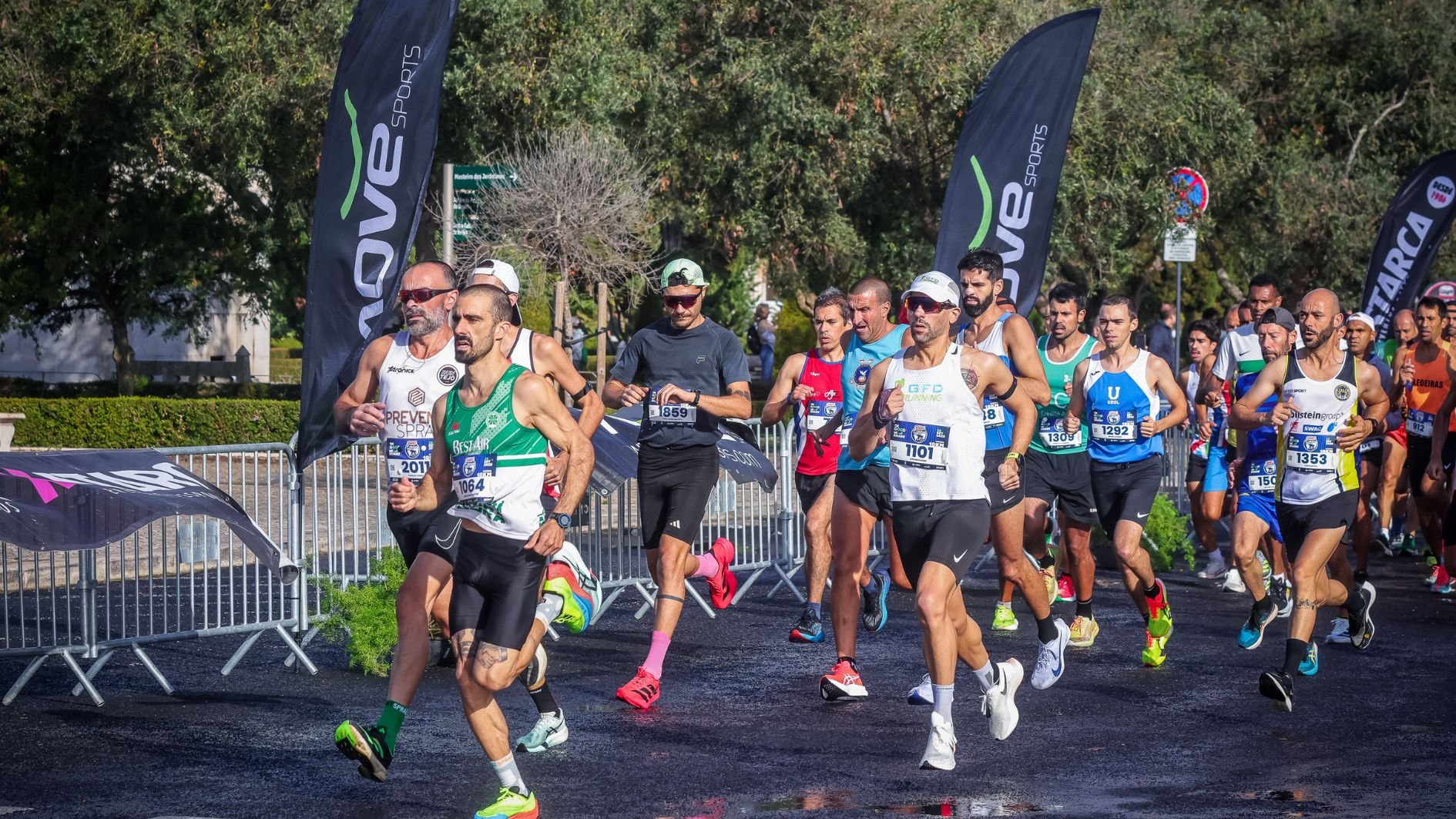
Running can begin in many different ways. For some, it starts with a decision to become more active. For others, it is the challenge of completing a first 5K, improving a personal best, spending time outdoors or simply finding an hour in the week that belongs entirely to them.
What often begins as exercise can gradually become something more consistent: a routine, a personal challenge, a social activity and, for many runners, an important part of everyday wellbeing.
The reasons are supported by evidence. Regular physical activity is associated with significant benefits for cardiovascular health, body composition, mental health, sleep and overall wellbeing, while research specifically looking at recreational running has linked it to improved cardiorespiratory fitness and cardiovascular function. A systematic review covering 2.6 million adults found that participation in running was associated with a lower risk of all-cause and cardiovascular mortality.
Yet statistics explain only part of running’s appeal. Its value also lies in progression: the first uninterrupted kilometre, the first 5K, a faster time, a longer distance, or simply the realisation that something that once felt difficult has become manageable.
What happens to the body when we run regularly?
Running asks the cardiovascular and respiratory systems to work harder, which is one reason consistent training can improve endurance and cardiorespiratory fitness.
The World Health Organization identifies regular physical activity as an important factor in reducing the risk of cardiovascular disease, hypertension and type 2 diabetes, while also contributing to healthier body composition and overall physical functioning. For adults, the WHO recommends 150 to 300 minutes of moderate-intensity aerobic activity per week, or 75 to 150 minutes of vigorous activity, alongside muscle-strengthening exercise.
Running can contribute towards those targets, but its benefits are not limited to the heart and lungs. As a weight-bearing activity, it places controlled mechanical demands on the muscles, bones and connective tissues. Evidence suggests that running can support adaptations in muscular strength and bone health, although those adaptations depend on training history, volume and the individual runner.
This is also why progression matters.
Someone starting to run does not need to begin by attempting five or ten kilometres without stopping. Programmes such as the NHS Couch to 5K deliberately combine walking and running before gradually increasing the amount of continuous running over several weeks. Rest days are built into the programme because adaptation happens between sessions as well as during them.
For beginners in particular, consistency is generally more valuable than trying to do too much too quickly. Building distance and intensity progressively gives the body time to adapt and can make running a habit that is easier to maintain.
Running can give the mind somewhere to go too
The mental side of running is more difficult to measure than distance, pace or heart rate, but it is no less relevant.
A large 2026 review of existing research on exercise and mental health found that exercise interventions reduce symptoms of depression and anxiety across different population groups. The WHO likewise recognises regular physical activity as beneficial for mental health, cognitive health, sleep and general wellbeing.
Running can contribute to those effects while also offering something very practical: a defined period away from many of the demands that compete for attention throughout the day.
There is a route to follow, a rhythm to find and an immediate task to focus on. Some runners use that time to think; others value precisely the opposite, finding that concentrating on pace, breathing and movement provides a temporary break from work, screens or daily concerns.
The benefits do not require an ambitious training programme either. The NHS notes that physical activity can help reduce stress and mental fatigue, support mood, improve confidence and contribute to better sleep.
Running should not be presented as a treatment for every mental health difficulty, nor does every run necessarily feel good. Tired days, difficult sessions and lost motivation are part of the experience too. What regular activity can provide is another tool for supporting wellbeing, particularly when it becomes a sustainable part of everyday life.
The importance of having something to work towards
One of running’s distinctive qualities is how visible progress can become.
A runner can measure kilometres, minutes, pace, frequency or simply the number of sessions completed. The goal does not have to be winning anything. For someone beginning from little or no running experience, completing 20 minutes without stopping may be a far more significant achievement than a podium is for somebody else.
That ability to set personal targets can change the relationship people have with exercise.
Research into beginner running groups has found improvements in exercise self-efficacy alongside successful progression towards continuous running, while studies of community running events have identified achievement goals as one of the factors encouraging continued participation.
A target gives training a purpose. Signing up for a 5K might encourage someone to run twice a week when they otherwise would not. Moving from 5K to 10K can introduce longer training sessions and a different understanding of pace. An experienced runner might work towards a personal best rather than a new distance.
Not every objective has to be numerical, either. Running regularly for a month, returning after a break, completing a race with a friend or simply enjoying a route that once felt demanding can all represent progress.
The finish line is useful because it is concrete. What happens before reaching it is usually where the larger change takes place.
Why participating in a race feels different from an ordinary run
Training alone and taking part in an organised race can involve exactly the same distance, but they rarely feel like the same experience.
A race provides a date around which preparation can be organised. There is anticipation beforehand, a shared starting line and a clear point of completion. For many participants, particularly those entering their first event, crossing that line offers a form of confirmation: the weeks of training have led somewhere tangible.
Research into mass-participation running events suggests that this sense of achievement is important. Participants also describe the atmosphere and interaction with other people as significant parts of the experience, alongside the physical act of completing the distance.
Races can therefore serve several purposes at once. Competitive runners may be chasing a time or position, while another participant is attempting their first 5K. Someone else may be running alongside a friend, raising money for a cause or using the event as motivation to become active again.
All can share the same road without needing to share the same objective.
That variety is part of what makes mass-participation running distinctive. The clock matters greatly to some people and very little to others, yet the event creates a common experience around movement.
Running together changes the experience
Running has the advantage of being possible alone, almost anywhere and with relatively little equipment. But its social dimension has become an equally important part of modern running culture.
Running clubs, informal groups and community events turn an individual activity into a regular meeting point. Training with others can provide encouragement on difficult days, make longer sessions feel less repetitive and introduce people who might have little else in common beyond the route they are sharing.
There is evidence that this social element can also influence whether people continue being active.
Research involving parkrun participants has found social interaction and improved fitness among the main reasons people participate. Other studies have associated stronger identification with a running group with greater participation, group cohesion and exercise satisfaction.
Another study looking at people who were less active before joining community running events found that social connectedness helped encourage continued participation and further physical activity.
This is an important distinction. Exercise does not always have to be another obligation fitted into an already crowded schedule. When it also becomes an opportunity to meet people, spend time with friends or belong to a community, there can be more reasons to return the following week.
And that social experience becomes particularly visible on race day, when experienced runners, beginners, families, children, volunteers and supporters occupy the same space.
This Sunday, Lisbon runs together at the Bimbo Global Race
That combination of movement, personal goals and community will be particularly visible in Lisbon this Sunday, 27 September, when the 11th Bimbo Global Race takes place in Belém.
With the start and finish area at Praça do Império, the event has been designed to accommodate very different ages and levels of experience rather than focusing on a single competitive distance.
The programme includes:
Kids Race 200m, for children up to 6 years old
Kids Race 400m, for children aged 7 to 9
Kids Race 800m, for children aged 10 to 12
10K Race
5K Mini-Race
5K Walk
The first children’s race starts at 08:50, followed by the remaining Kids Race distances. The 10K begins at 09:45, the 5K Mini-Race at 09:55 and the 5K Walk at 10:00.
The variety matters. A child running 200 metres, someone walking five kilometres with their family and an experienced runner chasing a 10K personal best are approaching the morning from completely different starting points, but all are participating in the same event.
There is also another reason why every participant counts.
The Bimbo Global Race combines physical activity with a global solidarity initiative. For every registration, 20 slices of bread will be donated, with the donations from the Lisbon event supporting Banco Alimentar Contra a Fome. The international Bimbo Global Race initiative is taking place across 23 countries in 2026, linking local events through the same commitment to physical activity and food donation.
Move Sports is once again involved in the organisation of the Lisbon edition, continuing its connection with an event that brings sport, families and social responsibility together in the same morning.
A distance only has to matter to the person completing it
Running is unusually adaptable. It can be competitive or recreational, solitary or social, carefully measured or deliberately free from watches and targets.
Its physical benefits are well established, but many of the reasons people continue running are harder to express in statistics: noticing progress, completing something that once seemed beyond reach, having time to think, training alongside other people or sharing the atmosphere of a race.
The distance itself is relative. For one runner, ten kilometres may be routine. For another, completing five kilometres for the first time can represent months of gradual progress. For a child lining up for 200 metres on Sunday morning, it may simply be a first experience of the excitement of a starting line.
Each of those experiences can provide a reason to keep moving.
And sometimes, as the Bimbo Global Race demonstrates, taking that step can contribute to something beyond the runner too.
Sources:
WHO – Physical activity and health benefits
PubMed – Health Benefits of Different Sports: Systematic Review and Meta-Analysis
PubMed – Exercise, depression and anxiety: 2026 umbrella review
NHS – Get running with Couch to 5K
Xistarca – Bimbo Global Race 2026 Lisbon
Bimbo Global Race – 2026 global initiative